360° Rotating Magnetic Drawing Board for Shared Play
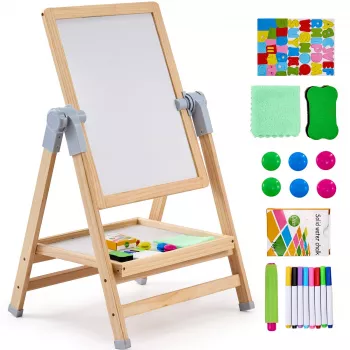
360° Rotating Magnetic Drawing Board with Accessories
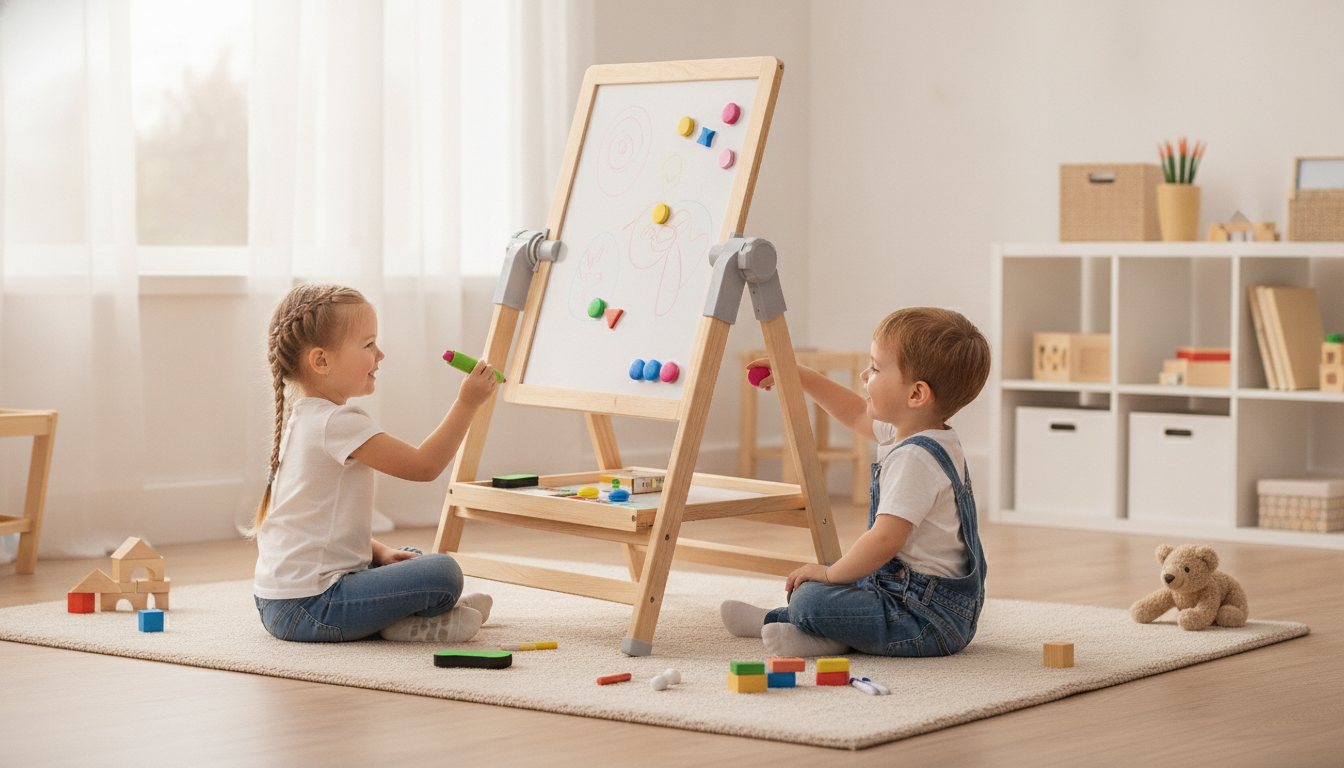
A rotating magnetic drawing board creates a tidy, reusable space for kids to sketch, trace shapes, practice letters, and build simple scenes with magnets. The 360° spinning design encourages sharing from any side of the table, so play stays active without constant repositioning—especially helpful during sibling time, playdates, or classroom centers.
What It Is and Who It’s For
This type of magnetic drawing board combines a wipe-clean drawing surface with magnetic play pieces, all set on a rotating base. It’s designed for repeat use, so kids can draw, clear, and start fresh without burning through stacks of paper.
- Reusable drawing surface that clears cleanly for repeat play without piles of paper.
- Rotating base helps multiple kids participate from different angles during group play.
- Useful for early writing practice, doodling, shape recognition, and pretend “classroom” games.
- A practical option for travel days, rainy afternoons, and quiet-time activities.
For families aiming to balance entertainment with low-mess learning, a magnetic board can be an easy “set it on the table and go” activity. For broader guidance on screen-free routines, the American Academy of Pediatrics offers age-based media recommendations at HealthyChildren.org.
What Comes in the Box
Most sets are built around a simple idea: give kids a drawing surface, give them magnets to interact with, and make resets fast. The result is a kit that feels self-contained and easy to pull out on demand.
- Drawing board with a rotating platform for all-around access.
- Magnetic accessories for building pictures, patterns, or simple learning prompts.
- A drawing tool (stylus/pen) for making lines, curves, and details.
- Eraser/slider function for quick resets between activities.
Accessory and Use Guide
| Item | Typical use | Tips for best results |
|---|---|---|
| Rotating drawing board | Shared drawing and magnet play | Place on a stable surface so the base spins smoothly |
| Magnetic pieces | Patterns, scenes, sorting games | Store by type to make cleanup faster |
| Stylus/pen | Drawing and tracing | Use light pressure for smoother lines and less wear |
| Eraser/clear mechanism | Resetting the surface | Clear fully before switching from drawing to magnets |
Standout Features That Make Play Easier
The best part of a rotating magnetic drawing board isn’t just the drawing—it’s the way the board structure removes common friction points during play.
- 360° rotation supports collaborative play and reduces “my turn” friction—kids can spin the board toward themselves instead of grabbing.
- Magnetic interaction adds a hands-on layer beyond sketching, helping kids build scenes and then embellish them with drawings.
- Quick-clear surface keeps activities flowing (practice → erase → repeat), which is great for letter formation drills and short attention spans.
- Compact, self-contained format helps reduce mess compared with markers, crayons, or paint.
For households with younger kids, it’s also worth reviewing basic toy safety guidance—especially when a set includes small parts. The Consumer Product Safety Commission provides practical tips at CPSC Toy Safety.
Activity Ideas for Different Ages
A rotating magnetic board grows with kids because you can keep the same tool but change the challenge level. A few easy ways to keep it fresh:
- Toddlers: free scribble time, matching magnets by color/shape, simple “find and place” games (“Put the star at the top!”).
- Preschool: trace lines and basic shapes, build a picture with magnets then add details with the stylus (faces, windows, wheels).
- Early elementary: letter and number practice, sight-word prompts, simple math (draw groups and count), storytelling scenes with a beginning/middle/end.
- Group play: one child places magnets as a “prompt,” another finishes the drawing, then rotate to switch roles.
To add variety, try “mystery draw”: one child places magnets while the other looks away, then the board spins and the second child guesses the scene before drawing the final details.
How to Set Up and Use It Smoothly
A small setup routine makes the board feel like a ready-to-go station instead of another toy pile. These quick habits help the surface stay responsive and the accessories stay together:
- Set the board on a flat surface with enough clearance for the base to rotate freely.
- Start with magnets first for a scene, then draw details around them (or reverse it for a reveal game).
- Use the clear/erase function often to keep the surface responsive and reduce “ghosting.”
- Create a simple routine: play → clear → store magnets → wipe exterior if needed.
If multiple kids are playing, consider a “spin for turns” rule: after finishing a quick task (one letter, one shape, one magnet move), rotate the board to the next person.
Care, Storage, and Safety Notes
When This Board Makes a Great Gift
In-Stock Picks to Pair with Creative Play
- 360° Rotating Magnetic Drawing Board with Accessories ($46.51)
- Remote Control Manta Ray Shark Toy – 2.4G RC Electric Water Animal for Kids ($29.01)
- 1:14 Scale RC Excavator with 22 Channels and 680° Rotation ($325.01)
FAQ
Is a rotating magnetic drawing board good for toddlers?
Yes—toddlers can enjoy scribbling, simple matching games, and fine-motor practice, but supervision is important if the set includes small magnetic pieces. Always follow the product’s age recommendations and keep accessories put away when not in use.
How do you clean and maintain a magnetic drawing board?
Wipe the exterior with a soft, slightly damp cloth and avoid harsh cleaners. Clear the drawing surface regularly to keep it responsive, and store the magnets and stylus together so pieces don’t get lost.
What are easy learning games to do with the magnets?
Try sorting by color or shape, copying patterns, and building quick storytelling prompts. For early learners, do letter/number “hunts” (“Place the triangle by the letter A”) and rotate turns so each child gets a challenge.








Leave a comment