Cactus Cat Tree Tower: Scratch Post, Condo & Top Perch
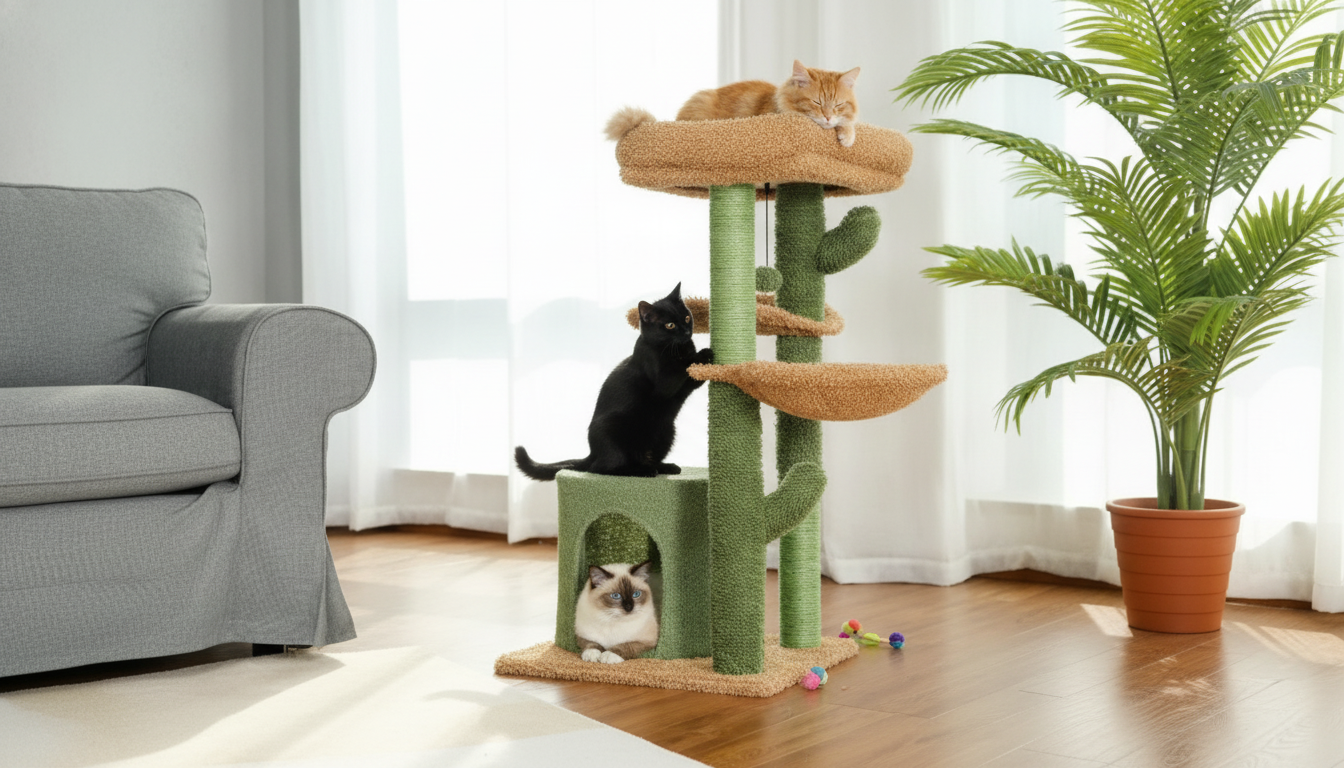
Cactus Cat Tree Tower with Scratching Post & Condo Nest
A playful cactus-shaped cat tower can add vertical space, a dedicated scratching area, and a cozy hideaway without taking over the room. This guide breaks down what this style of cat tree offers, who it suits best, and how to place and maintain it so cats actually use it.
If you’re shopping for a compact all-in-one option, the Cactus Cat Tree Tower with Scratching Post & Condo Nest is designed to combine climbing, scratching, and a covered rest spot in one vertical piece.
What Makes This Cactus-Style Tower Different
Most cat trees do the basics—platforms and a scratch area—but a cactus-style tower often stands out because it prioritizes “up” without demanding a huge footprint. That can be a big win for indoor cats that need more territory and variety in their day.
- Vertical layout: Encourages climbing, perching, and jumping—useful for indoor cats that need more activity zones.
- Dedicated scratching post area: Helps redirect scratching away from furniture when placed along common cat pathways.
- Condo nest: Creates a covered rest spot for cats that prefer enclosed sleep spaces or need a quieter retreat.
- Theme-forward design: Can blend with modern or playful decor while still functioning like a classic cat tree.
For general guidance on supporting healthy feline routines at home—scratching, resting, and play—authoritative resources like the ASPCA Cat Care and the AAFP Cat-Friendly Resources offer practical, cat-centered recommendations.
Key Features to Look For Before Buying
Even a cute design needs to perform like real cat furniture. Before choosing a cactus cat tree tower, focus on a few build-and-fit details that determine whether it becomes a daily hangout or just background decor.
- Stability: A wide base and solid joints reduce wobble during climbs and leaps.
- Scratch surface: Durable, grippy material with enough height for a full-body stretch.
- Condo sizing: Opening and interior space should fit the cat’s body length and turning radius.
- Perch comfort: A padded top and supportive platform edges help cats settle and feel secure.
- Easy cleaning: Removable cushions or wipeable surfaces make upkeep faster.
- Assembly: Clear instructions and included hardware reduce loose parts that can affect safety.
Quick Fit Check for a Cat Tree Tower
| What to check | Why it matters | Rule of thumb |
|---|---|---|
| Base footprint | Prevents tipping and wobble | Heavier and wider is better for active cats |
| Scratch height | Allows full stretch scratching | Tall enough for front paws fully extended |
| Condo opening | Ensures easy entry/exit | Wide enough for whiskers and shoulders without squeezing |
| Platform spacing | Supports comfortable climbing steps | Shorter gaps for kittens/seniors; larger gaps for athletic climbers |
| Material feel | Affects whether cats use it | Rough scratch texture + soft lounging surfaces |
Who This Tower Suits Best
A cactus cat tree tower is especially useful when you want multiple “cat jobs” handled by one piece: scratch, climb, observe, and hide. It tends to fit these households and personalities particularly well.
- Apartment and small-space households: Vertical territory without adding multiple bulky pieces.
- Frequent scratchers: A reliable, enticing alternative to carpet or sofa corners.
- Multi-cat homes: One cat can tuck into the nest while another claims the perch—separate zones can reduce tension.
- Shy or easily startled cats: A covered condo paired with an elevated lookout offers choice and control.
- Play-driven climbers: Cats that enjoy climbing, pouncing, and surveying from above.
Enrichment doesn’t have to be limited to cat furniture, either. If the household is also looking for a fun, separate activity (especially with kids), the Remote Control Manta Ray Shark Toy – 2.4G RC Electric Water Animal for Kids can add a little extra playtime variety while cats lounge nearby.
Best Placement for Real-World Use
Placement decides whether a cat tree becomes “prime real estate.” Cats gravitate toward spots that help them monitor their environment, stay near people, and follow their usual travel routes.
For more ideas on building an engaging indoor environment (especially for indoor-only cats), the Humane Society of the United States cat resources includes enrichment and behavior guidance that pairs well with adding vertical space.
How to Encourage Scratching and Lounging
Care, Cleaning, and Safety Checks
Product Details and Where to Find It
The Cactus Cat Tree Tower with Scratching Post & Condo Nest is built to combine climbing space, a scratch zone, and a covered resting spot in one vertical tower—ideal when you want a single piece to do multiple jobs.
FAQ
How tall should a scratching post be for a cat?
A scratching surface is most satisfying when it allows a full-body stretch—front paws fully extended with room to rake downward. Height helps, but stability and placement matter just as much, since cats avoid posts that wobble or sit out of their normal pathways.
Will cats actually use the condo nest?
Many cats do, especially those that prefer enclosed sleep spots or want a quieter retreat; bolder cats may use it less often than the top perch. To increase adoption, place the tower in a comfortable area and add familiar bedding that already smells like your cat.
Where is the best place to put a cat tree tower?
The best spot is usually a high-traffic room where the cat can relax while staying connected to household activity, ideally near a window. In multi-cat homes, place it where there’s enough space for one cat to pass without being cornered by another.








Leave a comment