4 Ratchet Tie-Down Straps: Metal Buckles for Cargo

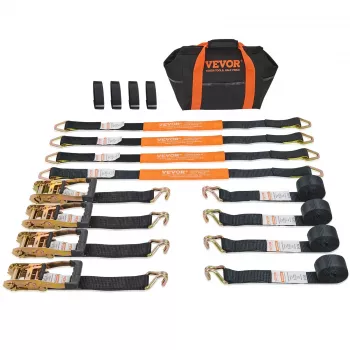
4-Pack Ratchet Tie-Down Straps with Metal Buckles for Luggage, Motorcycles, and Cargo
Keeping gear from shifting is the difference between a smooth trip and damaged cargo. A set of ratchet straps with metal buckles provides controlled tension, repeatable tightening, and a secure hold for luggage racks, motorcycle transport, and everyday hauling—without relying on knots or improvised cordage. With a four-pack, it’s easier to build stable, balanced tie-down patterns that keep loads centered and predictable through braking, bumps, and crosswinds.
When Ratchet Straps Make the Most Sense
Ratchet straps are most useful when you need firm, adjustable tension that won’t “spring back” the way elastic cords can.
- Motorcycle transport: Stabilizing the bike to a trailer, hitch carrier, or truck bed by keeping suspension compressed and preventing side-to-side movement.
- Luggage and roof-rack loads: Cinching suitcases, duffels, and hard cases so they don’t slide under braking or crosswinds.
- Garage and household hauling: Securing bins, tools, small appliances, or furniture to a dolly or in a vehicle.
- Outdoor gear: Bundling tents, paddles, and coolers to racks or cargo platforms where bungee cords can loosen.
For broader safety guidance on securing cargo, refer to NHTSA and the FMCSA cargo securement rules (general reference).
What Matters in a Tie-Down Set
Not all straps behave the same under load. A few practical details determine whether a tie-down feels solid or constantly needs readjustment.
- Metal buckle and hardware: Improves durability and reduces flex compared with all-plastic mechanisms in higher-tension scenarios.
- Webbing quality: A tighter weave and clean edges help resist fraying, especially where the strap contacts corners or rack rails.
- Length and adjustability: Enough tail to route around anchor points while still leaving room for the ratchet to take up slack.
- Pack size: Multiple straps allow balanced, symmetric tie-down patterns (front/back or left/right) rather than overloading a single strap.
- Ease of release: A reliable release lever reduces the temptation to cut straps when they’re over-tightened.
Quick Specs for the 4pcs Ratchet Strap Set
This 4-strap set is built for multi-point securing so luggage, bikes, and cargo can be restrained with better balance and control. Metal buckles are designed to hold up over repeated tensioning and release cycles, especially when used for routine hauling and transport.
At-a-Glance Checklist
| Feature | Why it helps | What to look for during setup |
|---|---|---|
| 4-strap pack | Enables front/back and left/right anchoring | Use at least two anchor points per load when possible |
| Ratchet mechanism | Controlled tightening without knots | Tighten in small increments; avoid sudden over-tension |
| Metal buckle | Durability and secure bite on webbing | Confirm the strap feeds straight and the buckle fully seats |
| Tie-down versatility | Works across racks, trailers, and vehicle cargo areas | Choose anchor points that won’t cut or pinch the webbing |
How to Strap Down Luggage Without Damaging It
Luggage is easy to secure, but it’s also easy to crush. The goal is to prevent sliding and lift while spreading pressure across stable contact points.
- Place luggage on a stable base: Use a rack platform, cargo tray, or flat surface with non-slip matting if available.
- Route straps around solid structure: Pass webbing around rack rails or through rated tie-down points rather than thin plastic trim.
- Protect corners and shells: Use soft loops, edge protectors, or a folded cloth where webbing crosses sharp edges.
- Tighten gradually and evenly: Alternate between straps so the load compresses uniformly and doesn’t twist.
- Check closure points: Keep straps away from zippers, latches, and handles that could be crushed under tension.
- Re-check after movement: After 5–10 minutes of driving, stop and confirm straps haven’t settled or loosened.
Motorcycle Tie-Down Patterns That Feel Stable
A stable motorcycle tie-down feels “planted,” not springy. A four-point layout and careful anchor selection do most of the work. For general riding and safety resources, the Motorcycle Safety Foundation is a helpful reference point.
- Use a four-point approach when possible: Two straps forward and two rear reduce sway and keep the bike centered.
- Anchor to solid points on the motorcycle: Handlebars with soft loops, lower triple clamp, or designated tie-down points—avoid fragile plastics.
- Compress suspension moderately: Enough to prevent bouncing, not so much that seals and components are overstressed.
- Keep strap angles wide: A wider stance (left/right separation) improves lateral stability compared with steep, narrow angles.
- Prevent strap rub: Ensure the webbing doesn’t saw against fairings, exhaust, or sharp metal edges during transport.
- Confirm ratchet orientation: Position the mechanism where it’s accessible for re-tightening and away from contact with the bike.
Common Mistakes and Simple Fixes
Care, Storage, and When to Replace Straps
In-Stock Gear Picks
- 4pcs Ratchet Strap Tie Down Cargo Belt with Metal Buckle for Luggage & Motorcycle — a four-pack for balanced tie-down patterns on racks, trailers, and vehicle cargo areas.
- 66ft Drain Cleaning Cable — a practical add-on for garage readiness when clogs slow down cleanup after projects and trips.
FAQ
Can ratchet straps be used to secure a motorcycle for highway transport?
Yes, when anchored to solid points and tightened evenly. Use multiple straps, protect contact points from rubbing, and re-check tension shortly after starting your drive.
How tight should a ratchet strap be on luggage or hard cases?
Tighten only until the load can’t slide or lift, then stop. If the case warps, latches bind, or zippers are being crushed, release and re-tension more gently using multiple straps to spread pressure.
What are the signs a tie-down strap should be replaced?
Replace straps with deep fraying, cuts, melted areas, damaged stitching, bent or cracked metal hardware, or a ratchet that won’t reliably hold tension.











Leave a comment