Career Growth, Clearly: 90-Day Skill Plan & Proof Map

Career Growth, Clearly: A Practical Plan for Skill-Building, Direction, and Next-Step Decisions
Career growth tends to feel toughest when the target is fuzzy, progress is hard to measure, and feedback shows up late (or not at all). A clearer approach is to build around strengths, role-relevant skills, and visible evidence of impact—so it’s easier to decide what to learn, how to prove it, and when to make a move.
What “career growth” looks like when it’s working
- Clarity: a specific direction (or target role) and a short list of skills that truly matter for it.
- Momentum: weekly actions that compound—projects shipped, stakeholders aligned, measurable outcomes.
- Visibility: work is documented and communicated in terms decision-makers understand.
- Mobility: more options (promotion, lateral move, or a better-fit role elsewhere) because capabilities travel well.
- Confidence: decisions are based on evidence (results, feedback, skill proof), not guesswork.
If you’re unsure what “good roles” look like across industries, the U.S. Bureau of Labor Statistics Occupational Outlook Handbook is a reliable place to sanity-check responsibilities, skills, and outlook.
Set a direction without boxing yourself in
You don’t need a perfect five-year plan. You need a workable “next step” that keeps you moving while preserving flexibility.
- Define a “next role” and a “next scope.” The next role is the title/level you’re aiming at; the next scope is a bigger impact version of your current job. Even if the title shifts later, scope growth keeps progress real.
- List 3–5 role signals. Focus on responsibilities and outcomes at the next level (e.g., “owns roadmap,” “reduces cycle time,” “leads cross-functional launch”), not just tools or certifications.
- Identify constraints early. Time available, preferred work style, income needs, and location/remote requirements will shape what’s realistic right now.
- Pick one primary lane for 90 days. Reducing context switching increases follow-through and makes results easier to attribute to you.
To pressure-test your lane, scan current thinking on career development at Harvard Business Review’s career planning topics and compare it to what your organization actually rewards.
Build a skill plan that maps to outcomes
Skills stick when they’re tied to outcomes someone cares about. Instead of “learn X,” think “use X to produce Y result.” Prioritize skills that increase impact across roles:
- Communication: clearer updates, fewer surprises, faster decisions.
- Execution: planning, risk management, shipping on time.
- Stakeholder management: alignment, negotiation, expectation-setting.
- Problem framing: defining what matters, what doesn’t, and why.
- Domain expertise: the “business context” that makes your work more valuable.
Skill-to-Proof Map (example)
| Skill to build | What “good” looks like | Proof to create | Timeframe |
|---|---|---|---|
| Stakeholder communication | Clear updates, fewer surprises, aligned priorities | Weekly one-page status + decision log | 4 weeks |
| Project execution | Milestones hit, risks managed, scope controlled | Project plan + post-mortem with outcomes | 6–8 weeks |
| Strategic thinking | Options evaluated, trade-offs explained | Brief with 2–3 options and recommendation | 3–4 weeks |
| Role-specific hard skill | Can deliver independently at required level | Work sample or shipped feature/case study | 4–12 weeks |
Use a simple 70/20/10 split: 70% on-the-job stretch work, 20% coaching/feedback, 10% courses/books. Most importantly, schedule skill work like meetings—two focused blocks per week beats occasional marathon sessions.
Make progress visible: a simple career dashboard
Many strong performers stall because results stay “in their head” or scattered across threads. A lightweight dashboard keeps your story coherent.
- Track three numbers: outcomes delivered, skills practiced, and visibility actions (updates, demos, write-ups).
- Keep a running wins log: capture the problem, your action, the result, and who it helped.
- Collect feedback in the moment: quick notes from 1:1s, reviews, and stakeholder messages—especially wording you can reuse later.
- Convert wins into reusable bullets: ready for performance reviews, resumes, and interviews without a stressful last-minute scramble.
For broader market context—what skills are trending and where hiring is shifting—check workforce updates via the LinkedIn Economic Graph and compare that to your own proof artifacts.
Use AI thoughtfully to speed up planning and communication
A ready-to-use toolkit for turning clarity into action
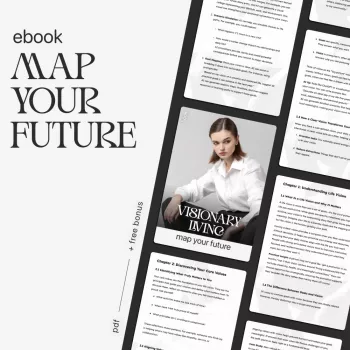
If you want a structured way to turn intentions into weekly execution, Career Growth, Clearly – Career Growth Guide, Digital Download, Career Planning eBook, Skill-Building Checklist, AI Career Prompts Toolkit is built to help you map direction, prioritize high-leverage skills, and generate better drafts for goals, updates, and interview stories—without losing your personal voice.
For an optional off-screen reset between deep work blocks, a simple hands-on break can help you come back sharper. Some people like a playful “micro-hobby” item such as the Remote Control Manta Ray Shark Toy – 2.4G RC Electric Water Animal for Kids to create a clean mental break—then return to planning and writing with less fatigue.
Common pitfalls that stall growth (and quick fixes)
FAQ
How long does it usually take to see measurable career progress?
Most people can create visible momentum in 4–12 weeks by shipping outcomes, logging wins, and improving communication. Larger signals like promotions or title changes often take 3–6 months (or longer), but leading indicators—scope growth, stronger feedback, and clearer ownership—show up earlier.
What if the next step isn’t clear—promotion, pivot, or a new company?
Run a 90-day plan that increases optionality: build transferable skills, create proof artifacts, and schedule informational conversations to test assumptions. Set decision checkpoints (for example, at weeks 4 and 10) based on real feedback and the traction you’re seeing.
How can AI help without making career materials sound generic?
Use AI for structure and first drafts, then edit in specifics: metrics, constraints, stakeholders, and your natural wording. Keep confidential details out of tools, verify claims, and do a final pass to ensure every statement is tied to work you actually did.











Leave a comment