Phased Career Development Plan: Skills, Network, Job Search

Career development that actually moves: a phased plan you can repeat
Professional growth is easier to manage when it follows a simple sequence: get clear on the destination, build proof you can do the work, expand the relationships that surface opportunities, and then run a focused job search. The steps below work whether you’re aiming for a promotion, pivoting into a new field, or landing a better-fitting role. Treat each phase like a set of small wins—then revisit your checklist monthly so your progress compounds instead of resetting.
If you want labor-market reality checks while you plan, the U.S. Bureau of Labor Statistics Occupational Outlook Handbook is a solid reference for role outlook and pay ranges, and LinkedIn Jobs is useful for seeing what employers ask for right now.
1) Set a clear target: role, level, and timeline
Start by choosing one primary role title (plus one adjacent title that uses the same skill set). Add the level you’re pursuing—entry, mid, or senior—and the industry context that fits you best. Clarity here prevents wasted effort later.
- Write a one-sentence “why this role” statement (skills to use, problems to solve, lifestyle priorities).
- Pick a timeline: 30/60/90 days for an active job search, or 3/6/12 months for internal growth.
- Decide realistic weekly hours, then protect them on your calendar.
- Pull the top five requirements from real job posts and treat them as your north star.
- Use measurable outcomes (portfolio pieces, outreach messages, interviews) instead of vague goals.
Career direction snapshot (fill in and update monthly)
| Category | Your answer | Evidence to collect |
|---|---|---|
| Target roles | e.g., Customer Success Manager / Account Manager | 5–10 job posts saved |
| Top skills to prove | e.g., stakeholder management, reporting, renewals | Projects, metrics, certifications |
| Ideal environment | e.g., remote-first, B2B SaaS, mid-size | Company list + notes |
| Timeline | e.g., 60–90 days | Weekly plan + tracking sheet |
| Deal-breakers | e.g., heavy travel, unclear commission plan | Screening questions for recruiters |
2) Build a skills map and close the right gaps
Once your target is set, translate job requirements into a simple skills map. Split items into core skills (must-have), supporting skills (nice-to-have), and tools (software/technical). This turns “I should upskill” into a prioritized plan.
- Prioritize gaps that show up repeatedly across postings—those unlock interviews faster.
- Create proof quickly with micro-projects: a short case study, a process improvement at work, volunteer work, or a small freelance engagement.
- Use a weekly cadence: learn (input) → apply (output) → document (evidence).
- Draft a short story for each skill: problem, action, result, and lesson.
Documentation matters more than perfection. A modest project with clear outcomes is often more convincing than a long course with no visible artifact.
3) Turn experience into resume-ready achievements
A resume earns attention when it reads like impact, not like a task list. Convert responsibilities into outcomes, and make the “change” obvious: what improved because you were there.
- Quantify whenever possible: revenue influenced, cycle time reduced, growth %, errors prevented, time saved.
- Use strong verbs and keep bullets scannable (one to two lines each).
- Tailor the top third of the resume (headline/summary + newest role bullets) to mirror the role’s priorities.
- Keep a master resume with every project and metric, then spin targeted versions for each role family.
- Match keywords naturally to job descriptions (tools, methodologies, role-specific terms) without forcing them.
A quick quality check: if someone skims only your first five bullets, do they understand your level, your scope, and the results you drive?
4) Strengthen online presence and portfolio signals
Hiring teams often verify your story online before scheduling interviews. Your LinkedIn and portfolio signals should echo your target role so there’s no “translation work” required.
- Align LinkedIn headline, About section, and recent experience to one value proposition.
- Add proof assets: a featured case study, project link, deck, or a short before/after process description.
- Request 2–3 recommendations that confirm the strengths the target role needs.
- Clean up public signals: consistent titles, accurate dates, professional photo, no empty buzzword lists.
- If pivoting, publish a “bridge” project that shows transferable skills in the new context.
For deeper thinking on positioning and career decisions, Harvard Business Review’s career planning hub is a useful complement to job-post research.
5) Network with a simple system (without being pushy)
6) Run a structured job search: pipeline, applications, and interviews
7) Negotiate and plan the first 90 days for momentum
A guided resource to follow the steps end-to-end
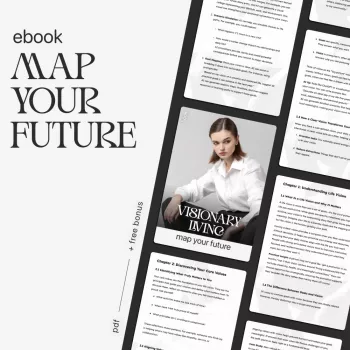
- Step-by-Step Career Development Guide – Professional Growth, Job Search, Networking & Resume Writing Ebook
- Remote Control Manta Ray Shark Toy – 2.4G RC Electric Water Animal for Kids (a light, screen-free break between outreach and interview prep blocks)
- 1:14 Scale RC Excavator with 22 Channels and 680° Rotation (a hands-on reset after long resume or portfolio sessions)
FAQ
How long does a structured career development plan take to show results?
Small measurable outputs—like a finished portfolio piece, a tightened resume, or consistent outreach—can show up within 2–3 weeks. Promotions and pivots often take 3–12 months, while new-job offers commonly land in the 6–12+ week range depending on role and market conditions.
What’s the simplest way to tailor a resume without rewriting everything?
Keep a master resume, then tailor only the headline/summary, the top 3–5 bullets in your most recent roles, and the skills/tools section to match the job’s priorities. Preserve quantified outcomes and adjust wording to mirror the job description’s language.
How do you network if you don’t know anyone in the field you want?
Start with second-degree connections, alumni groups, professional associations, and targeted informational interviews with people who have the job you want. Send a short curiosity-first message, follow up politely, and build momentum through consistent weekly outreach rather than one big push.











Leave a comment