3-Tier Metal Plant Stand: Shelves + Expandable Hanging Rod
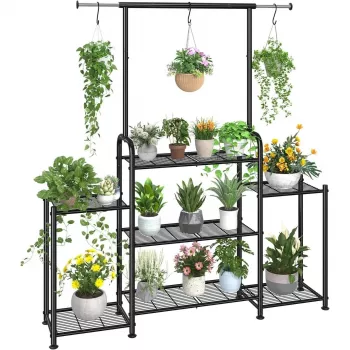
A three-level metal plant stand with an adjustable hanging rod makes it easier to style (and care for) a mixed plant collection in one tidy vertical footprint. You get shelf space for compact pots and heavier planters, plus overhead hanging room for trailing varieties that want to spill downward with better light access and airflow.
What This Stand Adds to a Plant Corner
When plants start multiplying, the hardest part is keeping them organized without turning the floor into a maze of pots and saucers. A 3-tier stand solves that by lifting greenery upward instead of outward.
- Three tiers create natural separation between small, medium, and taller pots without consuming much floor space.
- An expandable hanging rod supports cascading plants so vines can drape freely rather than pressing against shelves.
- Metal construction fits humid rooms like kitchens, bathrooms, and enclosed balconies when it’s kept dry and maintained.
- One stand can improve the look of a “plant corner” while keeping foliage off the floor and boosting circulation around leaves.
If you’re still fine-tuning basics like watering cadence and light exposure, reliable guidance from university extensions can help you match plants to placement—see the University of Minnesota’s houseplant care basics and Clemson’s general care guidance.
Best Uses: Indoor, Balcony, and Entryway Setups
This layout is flexible enough to work with different rooms—especially where you want greenery, but you can’t spare much width.
- Living room: Hang a pothos or philodendron from the rod and place compact pots on the shelves for an easy layered look.
- Balcony/patio: Put sun-loving plants on upper tiers, shade-tolerant plants below, and rotate positions occasionally for even growth.
- Entryway: Create a narrow “green welcome” by stacking plants vertically instead of spreading pots across the floor.
- Kitchen: Keep herbs and small houseplants elevated and away from splashes while still within reach for pruning and harvesting.
For small spaces, the biggest advantage is visual: your plants read as a single styled display rather than scattered clutter.
Expandability and Hanging: Getting the Most From the Rod
The expandable rod is the feature that turns a standard shelf unit into a mini “plant station.” A little planning helps it look balanced and prevents stress on the frame.
- Use the hanging rod for lightweight baskets or planters designed for suspension, and keep the weight balanced to reduce twisting.
- Choose trailing varieties like pothos, string-of-hearts, or spider plant to emphasize vertical lines and keep shelves from feeling crowded.
- Leave space so hanging leaves don’t block light to the top shelf; trimming runners keeps the display neat and encourages fuller growth.
- If using hooks, pick smooth, plant-safe hardware that won’t scratch protective coatings (scratches can become rust points over time).
A simple styling trick: hang one fuller plant centered on the rod, then keep the top tier slightly lower-profile so the whole display still feels open.
Practical Fit Check Before Buying
Before you commit, a quick fit check saves the most common frustrations—pots that overhang, vines that hit the ceiling, or a stand that shifts on slick floors.
- Measure pot width: Confirm your widest planters will sit fully on each tier without overhang.
- Plan headroom: Leave clearance above the stand for hanging growth; trailing plants can add surprising length over a season.
- Protect floors: On tile or hardwood, add felt pads or grippy feet to reduce slipping and protect finishes.
- Stability matters: In homes with pets or active kids, place heavier pots on the bottom tier to keep the center of gravity low.
Quick Feature Overview
If you’re deciding between a simple shelf and a combination stand, this snapshot helps confirm whether a 3-tier layout plus a hanging rod matches your space and plant mix. For everyday use, prioritize lighter hanging baskets and keep sturdier pots on the bottom tier.
| Feature | Why it matters | Setup tip |
|---|---|---|
| Three-tier shelving | Separates plants by size and light needs | Put sun lovers higher; shade-tolerant plants lower |
| Expandable hanging rod | Adds vertical hanging space for trailing plants | Center the hook and keep weight evenly distributed |
| Metal frame | Durable for frequent watering and rearranging | Wipe dry after spills; avoid standing water under pots |
| Small footprint | Fits corners and tight rooms | Angle it near a bright window without blocking walkways |
Care, Cleaning, and Long-Term Use
Metal stands are low-maintenance, but plant care introduces moisture, soil, and fertilizer residue. A few habits keep the finish looking clean while reducing rust risk.
Product Details and Where to Get It
If the combination of shelving plus hanging space matches your collection, the 3-Tier Metal Plant Stand with Expandable Hanging Rod is currently in stock for $51.51 (USD). It’s a practical way to keep potted plants organized while giving a trailing plant its own dedicated spot above the shelves.
For general home upkeep that often goes hand-in-hand with plant areas (think: sink clogs from soil rinse-off or routine maintenance), the 66ft Drain Cleaning Cable is also in stock.
FAQ
What types of plants work best on the hanging rod?
Trailing plants and lightweight hanging baskets work best—think pothos, string-of-hearts, and spider plants. Keep the load centered and avoid overcrowding so the top tier still gets light.
Can this stand be used outdoors?
Yes, with care: place it in a covered or partially covered area and dry it after watering or rain. Using saucers and avoiding standing water under pots helps protect the finish longer.
How should pots be arranged for stability?
Put the heaviest pots on the bottom tier, medium-weight pots in the middle, and the lightest pots on top. Keep hanging weight balanced and centered to reduce sway or twisting.








Leave a comment