36-Inch Dual-Purpose Lake & Landscape Rake Guide
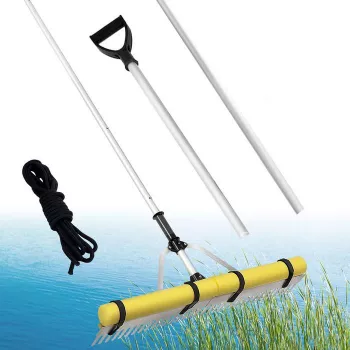
36″ Dual-Purpose Landscape & Lake Rake: Clean Shorelines and Tidy Outdoor Spaces
A dual-purpose landscape and lake rake is built for two of the messiest jobs around a home or cabin: clearing seasonal yard debris and pulling nuisance vegetation from shallow water. With a wide 36-inch head, the workflow shifts from “small-area tidying” to “cover ground fast,” whether you’re grooming a sandy edge for swimming or gathering leaves into manageable windrows. Below are the most practical ways this tool earns its keep, how to use it efficiently on land and at the waterline, and what details matter when you want one rake to do double duty.
What a Dual-Purpose Landscape & Lake Rake Is Used For
This style of rake is meant to pull and gather rather than dig. On the shoreline, it helps consolidate loose material so it can be removed before it breaks down, smells, or drifts back into the water.
- Shoreline cleanup: Pull floating weeds, algae mats, leaves, and small branches toward the bank for removal.
- Bottom grooming in shallow areas: Rake up dead vegetation and debris from sandy or mucky edges to improve access for swimming and boating.
- Landscaping cleanup: Gather leaves, pine needles, and thatch from lawns or garden beds without swapping tools.
- Surface leveling: Lightly smooth topsoil, spread mulch, or even out loose gravel in small areas.
- Seasonal maintenance: Handle spring storm debris, mid-summer aquatic growth, fall leaf drop, and pre-winter shoreline clearing.
Why a 36-Inch Wide Head Changes the Workflow
A 36-inch head is all about coverage. It can shorten long cleanup days, but only if you use it in a way that avoids overloading the rake face.
- Fewer passes: Wider coverage reduces time spent on beaches, open lawn areas, and longer shorelines.
- Cleaner windrows: A broad head pulls debris into a more consistent line for easier bagging, piling, or tarp hauling.
- More stable pulls in water: The wide rake face can feel more controlled when weeds resist and try to twist the tool.
- Tradeoff to plan for: Wide heads load up fast; several lighter pulls usually beat one heavy, back-straining pull.
Quick Specs and What They Mean in Use
For a rake that touches both soil and water, the basics matter more than extras. Start with working width, connection strength, and materials that tolerate wet, gritty conditions.
- Prioritize working width, connection/handle compatibility, and corrosion resistance for repeated water use.
- Consider total reach (handle length plus your stance) to reduce back strain along a bank.
- Match rigidity to debris type: light leaf litter can use a more forgiving pull; thick weeds and sticks benefit from a sturdier feel.
Feature Checklist for a Dual-Purpose Landscape & Lake Rake
| Feature | Why it matters | What to look for |
|---|---|---|
| 36-inch head width | Covers more area per pass | Wide, stable rake face that doesn’t twist under load |
| Water-ready construction | Reduces rust and premature wear | Corrosion-resistant materials and durable fasteners |
| Tine design | Determines what gets captured vs. left behind | Spacing that can grab weeds/leaves without constant clogging |
| Handle compatibility | Controls reach and leverage | Secure connection; ability to use a longer handle if needed |
| Weight and balance | Affects fatigue during long sessions | Comfortable pull with manageable loading when full |
| Edge/shoreline control | Helps avoid digging too deep | Rake profile that skims and gathers without gouging |
Best Practices for Raking in a Lake or Pond
Shallow-water raking is most effective when you keep your pulls controlled and consistent. The goal is to gather material without churning bottom sediment.
If algae or plant growth is recurring, it can help to understand contributing conditions. The U.S. Environmental Protection Agency’s overview of nutrient pollution and blooms is a useful reference for lakefront owners: https://www.epa.gov/nutrientpollution.
Best Practices for Yard and Landscape Cleanup
Safety, Environmental, and Property Considerations
- Wear gloves and sturdy footwear: shorelines can hide hooks, sharp sticks, shells, and jagged rocks.
- Watch footing on banks: work parallel to shore when possible and avoid steep, unstable slopes.
- Remove raked vegetation promptly so it doesn’t wash back in; let it drain away from the waterline before disposal.
- Check local guidance for invasive plants: disposal rules vary, and some species require specific handling. The USDA’s invasive species hub is a solid starting point: https://www.invasivespeciesinfo.gov/.
Care and Storage to Keep the Rake Performing
When This Tool Is the Right Fit (and When It Isn’t)
Product Spotlight: Tools In Stock for Outdoor Cleanup
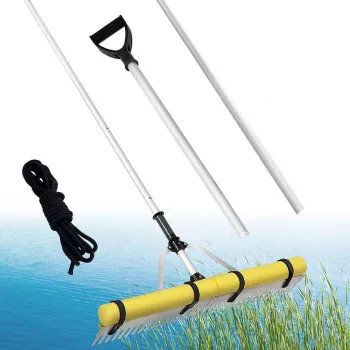
For faster coverage along banks and open yard areas, a wide-head rake is a practical upgrade. The 36″ Dual-Purpose Landscape & Lake Rake is designed for pulling floating vegetation, leaves, and shoreline debris to the bank, then transitioning to yard cleanup without changing tools.
For general property maintenance beyond raking—especially if outdoor drains are part of your seasonal prep—the 66ft Drain Cleaning Cable can help address clogs before heavy rain events or fall leaf drop overwhelm drainage lines.
FAQ
Can a lake rake remove rooted weeds?
It’s most effective on floating weeds or plants that are loosely attached. Rooted weeds may break at the stem while the crown remains, so repeated shallow-edge raking can reduce buildup but may not eliminate established growth.
How deep can a lake rake reach from shore?
Depth depends on handle length, your stance, and how quickly the bottom drops off. In practice, it works best in shallow shoreline zones where the head can maintain contact and still be pulled back without excessive drag.
How should aquatic weeds be disposed of after raking?
Pull vegetation well above the waterline and let it drain so fragments don’t wash back in. Bag, haul, or compost only where permitted, and follow local guidance for invasive species to prevent reintroduction.









Leave a comment