Calm in Motion: Micro-Resets to Beat Daily Stress

Calm in Motion: A Daily System for Managing Stress, Building Focus, and Staying Balanced
Stress relief tends to fall apart when it depends on perfect conditions: a quiet room, a long block of time, or a calm mind that shows up on command. A steadier day is more realistic when short practices fit into real schedules—between meetings, errands, messages, and family demands. The goal is simple: notice stress early, regulate the body quickly, reset attention, and turn small wins into a repeatable rhythm.
Stress is also widely recognized as a normal part of life—what matters is how often it spikes and how long it lingers. Resources like the American Psychological Association and the National Center for Complementary and Integrative Health describe how stress affects both mind and body—and why skills-based practices can help you respond more effectively.
What Daily Stress Looks Like (and Why It Lingers)
Everyday stress often shows up in the body before it becomes a clear thought. Common signs include a tight jaw or shoulders, shallow breathing, racing thoughts, irritability, trouble sleeping, emotional eating, procrastination, or feeling “wired but tired.” These aren’t character flaws—they’re signals that your nervous system is stuck in a high-alert mode.
A typical stress loop looks like this: trigger → threat appraisal (“this is bad”) → body response (tension, faster pulse, shallow breath) → reactive behavior (snapping, doomscrolling, avoidance) → more stressors (unfinished work, conflict, guilt). The loop keeps running because “just relax” rarely works on a stressed body. The mind focuses better after the nervous system gets cues of safety.
A practical goal isn’t to eliminate stress entirely. It’s to reduce the intensity and duration of stress spikes so you recover faster and make clearer choices.
The Calm-in-Motion Method: Notice, Downshift, Recenter, Repeat
1) Notice
Identify early signals—body first, thoughts second. Name the moment with a simple label: “stress spike,” “overload,” or “pressure.” Naming reduces ambiguity and helps you shift from reacting to observing.
2) Downshift
Use a fast physiological reset to lower arousal: breathing with longer exhales, a small movement change, a temperature shift, or grounding through the senses. The point is to turn down the volume before trying to “think your way” out of it.
3) Recenter
Choose one priority and one next action small enough to start in two minutes. Not a full plan—just a foothold. This restores agency and interrupts overwhelm.
4) Repeat
Stack micro-resets across the day. Consistency beats intensity. A helpful metric is the frequency of resets per day—not perfection, not a streak, not a flawless mood.
Quick Resets That Fit Real Life (30 Seconds to 5 Minutes)
When stress is high, start with the body. Problem-solving comes second.
- 60-second breathing: Inhale for 4, exhale for 6–8. Longer exhales can support a calmer physiological state.
- Grounding in the environment: Name 5 things you see, 4 you feel, 3 you hear, 2 you smell, 1 you taste (adapt as needed).
- Micro-movement: Shoulder rolls, calf raises, a short walk, or a gentle neck release—aim to change posture and breath.
- Cold splash or cool compress: A brief temperature change can interrupt rumination and reduce intensity.
- Two-minute tidy: Clear one small surface (desk corner, counter section). Less visual clutter often lowers cognitive load.
- If emotions are high: Pause decisions; downshift first, then choose the next right step.
Daily Reset Menu
| Moment | Reset option | Time | Best used when | Expected effect |
|---|---|---|---|---|
| Morning start | 3 slow exhale breaths + set 1 intention | 1 min | Waking with dread or rushing | Steadier tone for the day |
| Before work block | 2-minute posture + breath check | 2 min | Difficulty focusing | Improved attention and clarity |
| Midday slump | 10-minute walk without phone | 10 min | Mental fatigue, irritability | Energy reset, less reactivity |
| After a stressful message | Name the feeling + exhale longer than inhale | 1–2 min | Anger, anxiety, spiraling thoughts | Reduced intensity, better response |
| End of day | Brain-dump list + choose first task for tomorrow | 3–5 min | Overthinking at night | Less rumination, smoother morning |
Mindfulness Without the Pressure to “Empty Your Mind”
Using AI Support to Make Calm a Daily Habit
A 7-Day Starter Rhythm (Small Enough to Finish)
Digital Download: Calm in Motion—A Guided System for Inner Balance and Focus
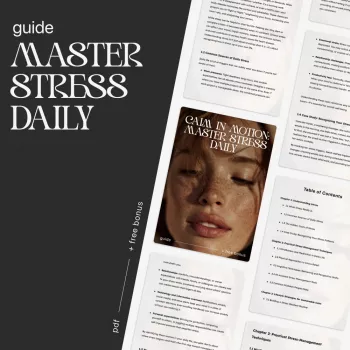
If a structured guide helps you follow through, Calm in Motion: Master Stress Daily (digital download) is designed for real schedules: quick practices, simple check-ins, and guided steps you can use on a phone, tablet, or computer. It’s especially useful for work pressure, decision fatigue, social overwhelm, and end-of-day rumination.
For households where stress relief also means adding short, screen-free breaks, a playful reset can help shift mood and attention—especially with kids. The Remote Control Manta Ray Shark Toy can turn a tense afternoon into a quick movement-and-laughter break (the key is using it intentionally as a short reset, not a long distraction).
FAQ
How long does it take for a calming practice to work during a stressful moment?
Relief can begin in 30–90 seconds with breathing, grounding, or a quick temperature shift, especially if you focus on longer exhales. The bigger payoff comes from repetition: stress spikes become less intense and shorter over time.
Can mindfulness help if the mind won’t stop racing?
Yes—mindfulness helps by noticing the racing mind without escalating it. Try one-breath focus for five cycles, label thoughts as “planning” or “worry,” and return to a longer exhale to settle enough to re-enter the task.
Is an AI-guided stress plan private and safe to use?
It can be safer when you avoid sensitive personal data and keep scenarios general (work pressure, deadlines, family stress) while focusing on skill-building. AI isn’t a substitute for medical or mental health care, especially in crisis situations.








Leave a comment