Curry Nonstick Roaster with Rack: Crisp Roasts, Easy Clean
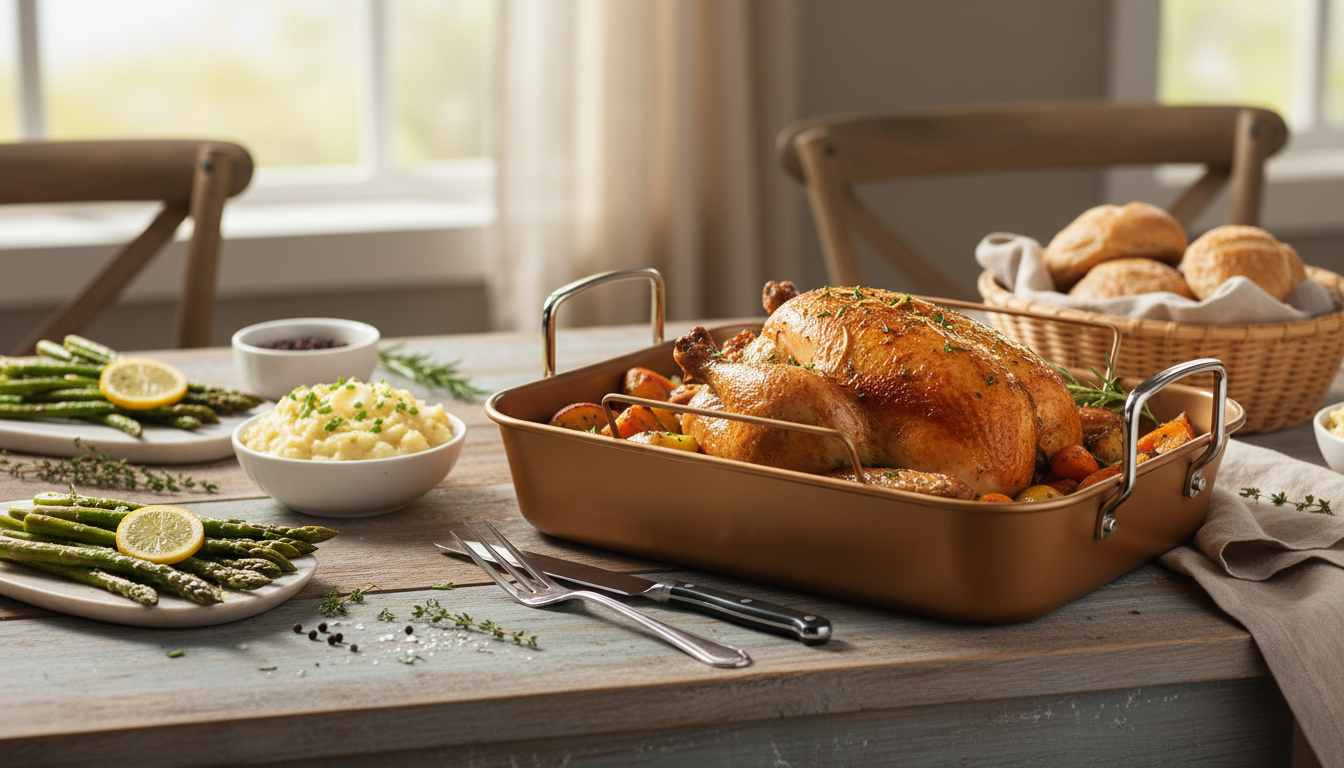
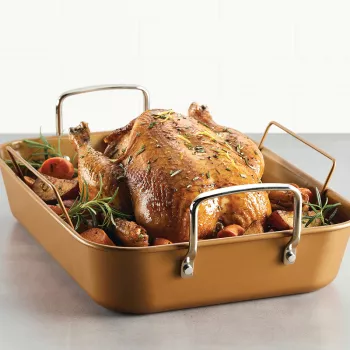
Curry Nonstick Roaster with Rack
A dependable roaster can simplify weeknight meals and holiday prep by keeping foods elevated, browning evenly, and making cleanup easier. The Curry Nonstick Roaster with Rack is designed for roasting meats and vegetables while helping drippings collect for gravy or pan sauces. With a removable rack and a deeper pan profile, it supports everything from crisp-skinned poultry to hearty baked pasta—without wrestling stuck-on bits after dinner.
What comes with it
- Nonstick roasting pan designed to handle high-volume oven roasting and baking
- Removable rack to lift food above the pan surface for better air circulation
- Pan depth suited to catch drippings and reduce spillover during longer roasts
Why the rack matters
A rack is more than an accessory—it changes how heat and moisture behave in the pan. When food sits directly in drippings, the bottom can steam while the top browns. Elevation helps solve that.
- Elevates poultry or roasts so heat can circulate underneath for more even cooking
- Helps separate food from rendered fat for cleaner slices and less soggy skin
- Creates space for aromatics (onion, celery, carrots) and liquids to build flavorful drippings
- Makes lifting large items easier compared with sliding a roast out of a flat pan
For a holiday bird, that “lift” factor can be a stress-saver: instead of tilting the pan and risking spills, the rack provides a stable structure for moving the roast and draining excess fat before carving.
Everyday ways to use a nonstick roaster
A roaster earns its keep well beyond Thanksgiving. The depth helps contain splatter and juices, while the nonstick surface makes sticky glazes and sugary marinades less intimidating.
- Roast chicken, turkey breast, pork loin, or beef roasts while collecting drippings
- Batch-roast vegetables on the rack or in the pan for crisp edges and easy release
- Bake casseroles or sheet-style dinners when extra depth is helpful
- Use the pan (without the rack) for lasagna, baked pasta, or braised dishes (confirm oven-safe limits before braising at high heat)
Roasting setups and practical tips
| What’s cooking | Rack position | Add to the pan | Simple tip |
|---|---|---|---|
| Whole chicken | Use rack | Sliced onion + lemon + a splash of broth | Pat skin dry and leave space around the bird for browning |
| Pork loin | Use rack | Apple cider or stock + herbs | Tent loosely with foil if the top browns faster than the center cooks |
| Vegetable medley | Optional (rack or direct) | Light oil + seasoning | Spread in a single layer to avoid steaming |
| Lasagna or baked pasta | No rack | Sauce (plus a lined baking sheet underneath if very full) | Rest 10–15 minutes before slicing for cleaner portions |
Nonstick performance and browning expectations
Nonstick is built for easier release, not necessarily darker crust. Great browning usually comes down to moisture management and airflow.
- Nonstick surfaces are designed to help release foods and reduce sticking when roasting sugary marinades or sticky glazes
- For deeper browning, preheating the oven and avoiding overcrowding typically matters more than the pan surface
- Use the rack when crisping skin or fat caps is a priority; use the pan directly when juices are meant to soak in
If you’re chasing a crisp finish, consider drying the surface (especially poultry skin), roasting uncovered, and keeping vegetables spaced out so they roast rather than steam.
Handling, cleanup, and keeping the coating in good shape
Nonstick cookware lasts longer with a few simple habits—especially when you’re working with racks, which can rub or scrape if stored carelessly.
- Let the pan cool before washing to reduce warping and extend coating life
- Use silicone, nylon, or wooden utensils; avoid metal tools that can scratch
- Skip abrasive pads and harsh cleaners; soak briefly if baked-on drippings are stubborn
- Store carefully to prevent rack edges or other cookware from rubbing the nonstick surface (a towel or liner helps)
Food safety basics for roasting
Roasting is one of the easiest ways to cook for a group, but it’s also where temperature matters most. The most reliable path to safe, juicy results is a thermometer.
- Use a food thermometer for doneness; time alone is an unreliable indicator
- Let larger roasts rest after cooking so juices redistribute and carryover heat finishes the center
- Keep raw meat juices contained and wash hands, boards, and utensils promptly to prevent cross-contamination
For quick reference, follow USDA safe minimum internal temperature guidance and thermometer best practices from the FDA: USDA FSIS Safe Minimum Internal Temperatures and FDA Food Thermometers.
Picking the right size and capacity for your kitchen
Roasters look similar at a glance, but the best fit depends on what you cook most often and how much space your oven and storage allow.
Quick checklist before the first cook
In-stock picks to round out your home setup
- Curry Nonstick Roaster with Rack — a versatile roasting pan and rack combo for meats, vegetables, and deep bakes.
- 66ft Drain Cleaning Cable — a handy home-maintenance tool to keep sinks and drains running smoothly when clogs slow you down.
- Remote Control Manta Ray Shark Toy – 2.4G RC Electric Water Animal for Kids — a playful option for pool time and outdoor fun.
FAQ
Is the Curry Nonstick Roaster with Rack oven-safe at high temperatures?
Check the manufacturer’s maximum oven-safe temperature on the product listing or packaging before roasting at very high heat. Avoid broiler use unless the instructions specifically say it’s permitted.
Can the rack be removed for casseroles or braises?
Yes—the rack is typically removable, letting you use the pan on its own for casseroles, lasagna, or saucier dishes. Make sure the rack sits flat and stable when reinserted so large foods lift out evenly.
How can the nonstick surface be protected from scratches and wear?
Use silicone, wooden, or nylon utensils and avoid metal tools that can scratch the coating. Clean gently with non-abrasive sponges and store with a soft liner or towel to prevent rubbing when stacked.









Leave a comment