Large Cat Tree with Big Hammock & Sturdy Scratch Posts
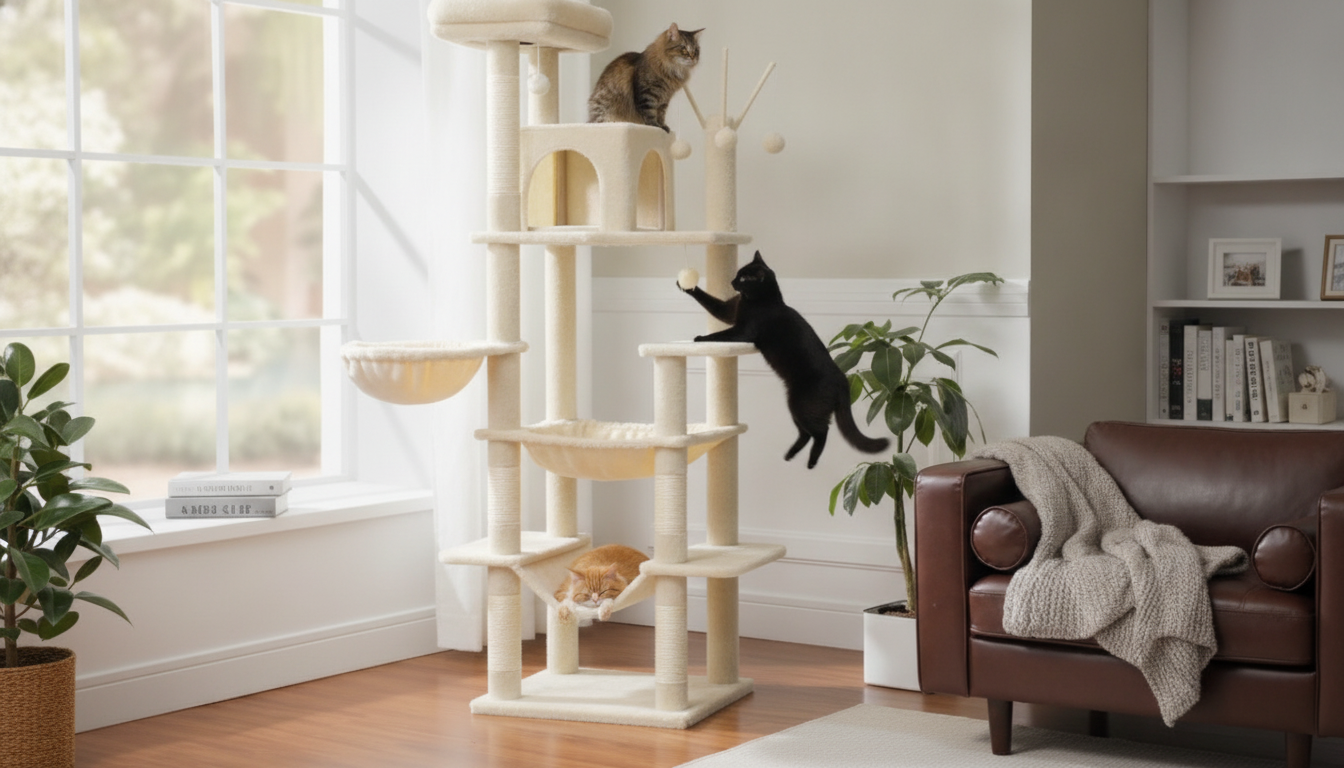
Large Cat Tree with Super Big Hammock and Scratching Posts for Indoor Cats
A well-designed indoor cat tree can turn one corner of a room into a climbing route, scratch zone, and nap station. A large model with a roomy hammock and sturdy scratching posts does double duty: it gives cats a comfortable “sink-in” resting spot and a reliable surface for daily stretching and claw care. Below is a practical guide to choosing the right size, setting it up for stability, and keeping it clean and appealing for cats of different ages and activity levels.
Why a big hammock matters for indoor cats
A hammock isn’t just a cute extra—it’s often the place cats choose when they want deeper, longer rest. Unlike a flat platform, a hammock naturally curves around the body, creating a cradled position many cats find calming and secure.
- Supports longer lounging sessions: The curved “nest” shape can feel more stable and cozy than a hard shelf.
- Helps larger cats and multi-cat homes: A bigger hammock reduces the “only one cat fits” problem that leads to guarding and squabbles.
- Builds confidence for timid cats: Resting off the floor can provide a calmer vantage point and reduce startle responses.
- Pairs well with vertical play: Cats can climb, pounce, and then settle into the hammock without leaving the tree’s territory.
Scratching posts: materials, placement, and what cats actually use
Most cats won’t commit to a scratching post that wobbles or feels too short. When the post shifts under pressure, cats often abandon it and return to furniture because the “feedback” isn’t satisfying.
- Choose thick, stable posts: Thicker posts tend to resist wobble, which encourages full-force scratching.
- Go tall enough for a full-body stretch: Adult cats often prefer posts that let them extend shoulders, back, and hips.
- Favor rope-wrapped scratching surfaces: Sisal-style rope typically holds up better than plush fabric under daily use.
- Multiple scratch zones work best: Posts on different levels increase the odds your cat scratches the tree instead of a couch corner.
- Placement influences behavior: Cats scratch to mark and to stretch after resting, so placing the tree near a social area or window can increase use.
For deeper behavior guidance, see International Cat Care’s overview of scratching behavior and the ASPCA’s tips on scratching. If claw damage at home is a concern, it’s also worth understanding why declawing is discouraged; the AVMA declawing policy provides helpful context.
Quick specs and fit check before buying
Before you click “add to cart,” do a fast measurement and lifestyle check. The goal is a tree that fits the room, supports your cat’s weight and movement style, and provides enough “zones” for peaceful sharing.
Room and cat fit checklist
| What to check | Why it matters | Simple rule of thumb |
|---|---|---|
| Base width and weight | Reduces tipping when cats jump or wrestle | Choose a base that feels difficult to shift by hand |
| Hammock depth and anchors | Prevents sagging and improves comfort for larger cats | More attachment points and stronger seams are preferable |
| Post thickness | Cats scratch harder on stable surfaces | Thicker posts tend to wobble less |
| Level spacing | Affects accessibility for seniors or less agile cats | Use shorter steps for older cats; taller climbs for active cats |
| Number of zones | Reduces conflict in multi-cat homes | Aim for at least two resting areas per cat when possible |
If you have kittens or older cats, prioritize “easy step-ups” between levels rather than big leaps. For multi-cat homes, look for a mix of resting styles (hammock plus platforms) so one cat can’t monopolize the only comfortable spot.
Stability and safety for everyday use
A tall cat tree is only as good as its stability. Most issues—cats avoiding it, wobble anxiety, or tipping risk—can be prevented with smart placement and quick maintenance.
Best placement: windows, routines, and keeping cats interested
Care, cleaning, and extending the life of the scratching posts
Featured option: Large Cat Tree with Super Big Hammock & Scratching Posts
If you’re looking for a “main station” that combines a roomy nap zone with reliable scratch surfaces, the Large Cat Tree with Super Big Hammock & Scratching Posts is built around that balance. It’s a strong fit for indoor cats that need vertical territory and a comfortable place to settle after play—especially when set near a bright window or in a living room corner that sees daily activity.
Also helpful for pet households
Cat hair has a way of showing up everywhere, including sinks and tubs. If your household deals with frequent clogs, the 66ft Drain Cleaning Cable can be a practical tool to keep plumbing running smoothly—especially in homes where grooming and shedding are part of the weekly routine.
FAQ
Will a hammock cat tree work for a large or heavy cat?
Yes, as long as the hammock is sized appropriately and supported by strong attachment points and seams. Prioritize a wide, heavy base and thick posts for stability, and use wall anchoring if the model supports it and your cat launches onto the tree with speed.
How can a cat be trained to use the scratching posts instead of the couch?
Place the tree near the area your cat already tries to scratch, and make sure the posts don’t wobble. Reward post use with treats or praise, add catnip if your cat responds to it, and provide multiple scratching spots so the post is always convenient.
Where should a cat tree be placed in a small apartment?
A window-adjacent corner or a spot near everyday family activity usually gets the most use, as long as there’s safe clearance for jumping. Keep it away from litter and food zones, avoid tight walkways, and consider a firm mat under the base on plush carpet to reduce rocking.








Leave a comment