Light-Up Baby Piano Toy: Sounds, Skills & Play Ideas
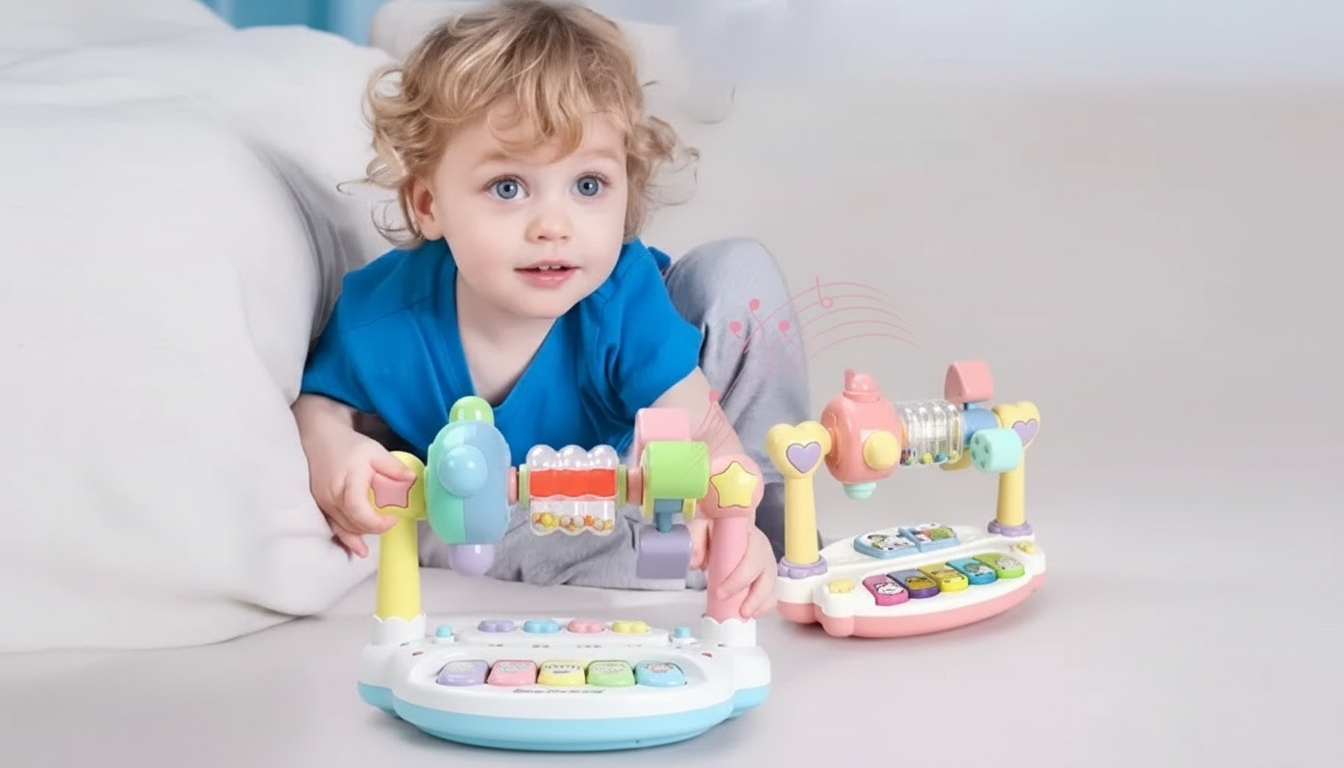
Baby Musical Piano Toy with Lights & Sounds: A Fun First “Instrument” for Toddlers
A light-up musical keyboard can turn everyday play into an engaging routine that supports early listening, movement, and cause-and-effect learning. With a few simple keys, toddlers get instant feedback—press, hear, see—which makes musical play feel “magical” while still building real early skills. Below is what to look for, how toddlers often use a piano toy at different ages, and easy ways to keep playtime safe, fresh, and development-friendly.
What Makes a Toddler Piano Toy So Engaging
- Cause-and-effect: pressing a key triggers sound and lights, reinforcing early problem-solving.
- Sensory variety: sound, color, and touch work together to hold attention longer than single-sense toys.
- Open-ended play: toddlers can explore freely (random notes) or follow simple patterns (repeat a rhythm).
- Low-pressure creativity: music play encourages experimenting without “right or wrong” outcomes.
Skills Toddlers Practice During Musical Play
- Fine motor control: tapping keys, isolating fingers, and switching hands.
- Auditory discrimination: noticing high vs. low notes and loud vs. quiet sounds.
- Early rhythm and timing: clapping along, tapping in patterns, pausing and starting.
- Language building: naming colors, counting keys, identifying “fast/slow” and “up/down” sounds.
- Social-emotional skills: turn-taking, copying an adult’s “musical question” and replying with sounds.
These playful moments also align with the broader idea that young children learn best through hands-on exploration and back-and-forth interaction. For a helpful overview of how play supports development, see NAEYC’s guidance on play and learning.
Feature Breakdown: Lights, Sounds, and Simple Controls
- Lights: look for bright, clear indicators that respond directly to key presses.
- Sound modes: musical notes, melodies, or animal/voice sounds can expand play variety.
- Volume considerations: a lower-volume option helps protect little ears and supports calmer play.
- Key feel: responsive keys that activate easily reduce frustration for younger toddlers.
- Portability: a compact keyboard is easier for room-to-room play and quick cleanups.
Quick Guide to Common Piano Toy Features and What They Support
| Feature | What the child experiences | Skills supported | Play idea |
|---|---|---|---|
| Light-up keys | Immediate visual feedback | Attention, cause-and-effect | Press one key and name the color together |
| Multiple sound options | Variety beyond a single tone | Curiosity, listening skills | Pick a “sound of the day” and find it again |
| Simple on/off control | Predictable start/stop | Self-regulation | Practice turning it off at the end of play |
| Melody/demo mode | Structured musical sequences | Memory, imitation | Pause the melody and let the toddler “finish” with a key press |
| Free-play note mode | Open-ended exploration | Creativity, motor skills | Copycat game: adult plays 2 notes, toddler repeats |
How to Use a Baby Musical Keyboard at Different Ages
- Around 12–18 months: keep sessions short and supervised; focus on pressing one key at a time and celebrating the response.
- Around 18–24 months: introduce easy patterns like “tap-tap-pause” and invite copying.
- Around 2–3 years: add counting games (1–3 keys), color-naming, and “loud/soft” listening challenges.
- For multiple kids: set a quick turn-taking rule (one short “song” each) to reduce grabbing and frustration.
If you’re curious what skills tend to appear by age, the CDC developmental milestones can help you match play expectations to your child’s stage.
Play Ideas That Keep It Educational (Without Feeling Like a Lesson)
- Color hunt: call a color and let your child find a matching light/key.
- Animal or sound match: if different sound effects are included, guess the sound together, then repeat it.
- Musical freeze: play a few notes, then pause; your toddler practices stopping and starting on cue.
- Follow-the-leader: alternate who plays first; keep patterns to 1–3 notes for easy wins.
- Story soundtrack: add “rain” (soft taps) and “storm” (faster taps) during a short bedtime story—then power down when the story ends.
Safety and Setup Tips for Lights-and-Sounds Toys
- Choose an age-appropriate toy and supervise younger toddlers during use.
- Check battery access: the compartment should be secure and not easily opened by a child.
- Keep volume comfortable: shorter sessions help if your child is noise-sensitive.
- Inspect regularly for cracks, loose parts, or sharp edges—especially after drops.
- Wipe-clean routine: use a slightly damp cloth for surfaces and avoid soaking electronics.
For more toy safety basics (including battery and small-parts guidance), review the American Academy of Pediatrics toy safety tips.
When This Toy Makes a Great Gift
Product Picks: Interactive Toys That Encourage Active Play
Baby Musical Piano Toy with Lights & Sounds – Educational Keyboard for Toddlers
Shop: Baby Musical Piano Toy with Lights & Sounds – Educational Keyboard for Toddlers
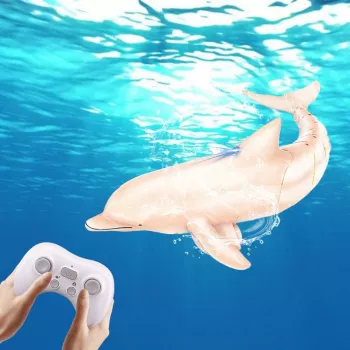
Remote Control Manta Ray Shark Toy – 2.4G RC Electric Water Animal for Kids
Shop: Remote Control Manta Ray Shark Toy – 2.4G RC Electric Water Animal for Kids
FAQ
What age is a light-up piano toy best for?
Many light-up piano toys work well from about 12 months and up, depending on the specific design and small-part safety. Younger toddlers usually enjoy simple key presses with close supervision, while older toddlers can try patterns, copying games, and counting activities.
Are musical toys with lights and sounds too stimulating?
They can be if the volume is high or play goes on too long. Keep sessions brief, use a lower-volume setting when available, and watch for signs like covering ears or fussiness; if it ramps your child up, save it for earlier in the day instead of right before sleep.
How can a toddler piano toy be educational without structured lessons?
Try simple, playful challenges: name colors as keys light up, count 1–3 presses, copy short note patterns, practice stop/start with “freeze,” and describe sounds as high/low or loud/soft. These quick games build early skills while still feeling like free play.






Leave a comment