Modern Wooden Cat Tree Tower: Condo, Nest & Scratchers
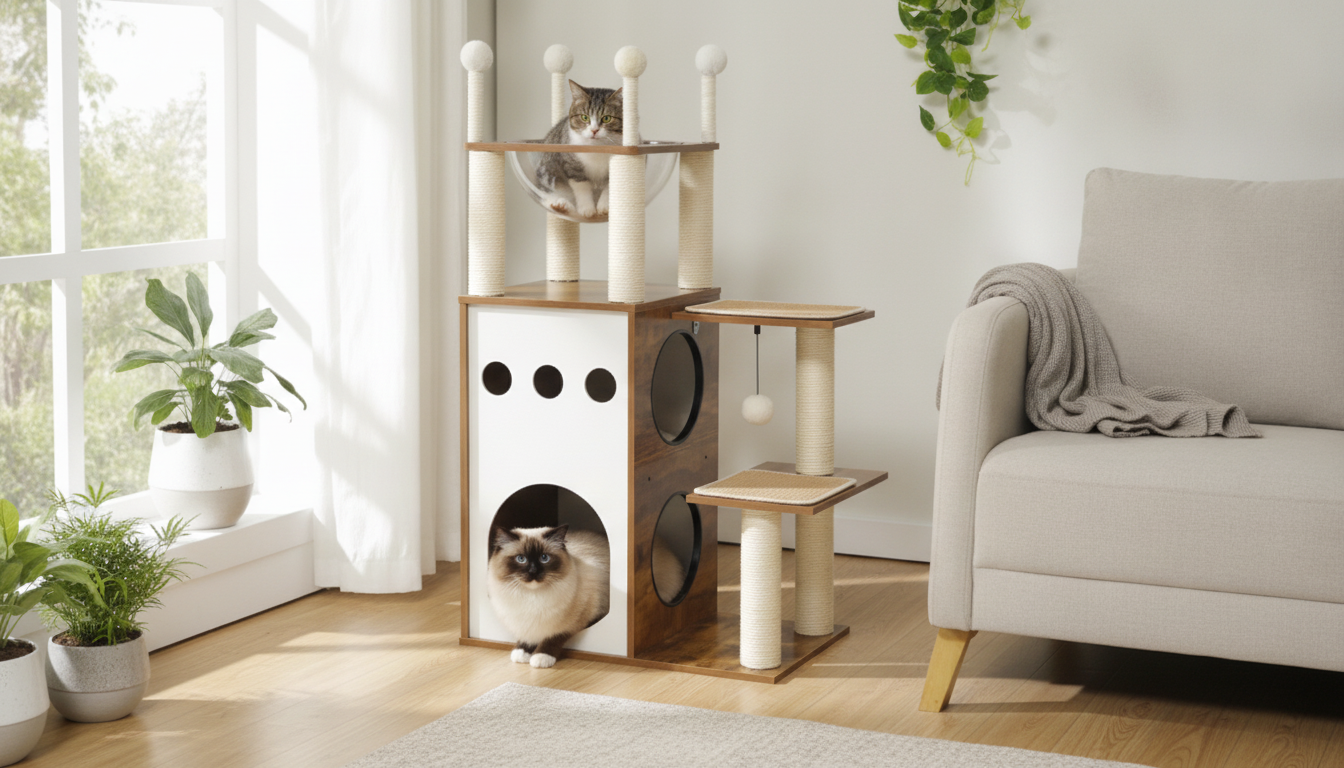
Modern Wooden Cat Tree Tower with 2-Floor Condo, Capsule Nest & Scratching Posts
A well-designed cat tree can do more than add height—it can provide secure hiding spots, comfortable lounging, and a dedicated place to scratch. This modern wooden tower combines a two-level condo, a capsule-style nest, and multiple scratching posts to support daily climbing, resting, and play while fitting cleanly into contemporary rooms.
If you’re upgrading from a worn, carpet-heavy tower (or adding your first “vertical territory” for an indoor cat), a wood-forward cat tower can feel more like real furniture—sturdy, easy to place, and visually calm in living rooms, bedrooms, and apartments.
Who This Cat Tower Suits Best
- Indoor cats that need vertical space for exercise, confidence-building, and healthy routines.
- Cats that enjoy both open and enclosed zones—perching up high, then retreating for a nap.
- Homes that prefer a modern look with wood-forward styling instead of full plush towers.
- Multi-cat households that benefit from separate “rooms” (capsule nest, condo levels, and scratch zones) to reduce friction.
Key Spaces: Condo Floors, Capsule Nest, and Perching
- Two-floor condo creates a quiet retreat for napping and decompressing away from foot traffic.
- Capsule-style nest offers a semi-enclosed curl-up spot that can feel secure for cautious cats or cats that like to observe quietly.
- Multiple levels encourage natural climbing and let cats choose different heights throughout the day, which supports enrichment for indoor lifestyles.
- Dedicated scratching areas help redirect clawing away from sofas, rugs, and door frames while providing full-body stretching.
Indoor enrichment matters, especially when outdoor exploration isn’t part of the routine. International Cat Care highlights how vertical territory, resting options, and choice-based spaces support cats’ environmental needs: https://icatcare.org/advice/the-indoor-cat/.
Feature Overview at a Glance
Use the table to compare the main components and what each one supports day-to-day.
| Component | What it’s for | Helpful for |
|---|---|---|
| 2-floor condo | Enclosed resting and hiding | Shy cats, daytime sleepers, multi-cat boundaries |
| Capsule nest | Cozy, semi-private lounging | Cats that like curling up or observing quietly |
| Scratching posts | Claw maintenance and stretching | Furniture protection, stress relief, daily exercise |
| Multi-level layout | Climbing and vantage points | Active cats, boredom reduction, environmental enrichment |
| Wood-forward design | Sturdy feel and modern look | Living rooms, apartments, minimalist spaces |
Materials, Stability, and Everyday Durability
- Wood structure can provide a more rigid, furniture-like base compared with fully plush towers, especially helpful for confident jumpers.
- Stability improves on a flat surface; avoid positioning one edge on thick rug folds that can introduce wobble.
- Scratching surfaces wear gradually. If your cat favors one side of a post, encourage switching angles by rotating the tower’s orientation or enticing play on the less-used side.
- For energetic launches, placing the tower near a wall or in a corner can reduce lateral movement and give cats a more secure “takeoff and landing” zone.
Scratching is a normal, healthy behavior tied to claw maintenance, stretching, and communication. The ASPCA’s overview explains why scratching happens and how to redirect it appropriately: https://www.aspca.org/pet-care/cat-care/common-cat-behavior-issues/scratching.
Placement Ideas That Cats Actually Use
- Near a window: Bird-watching and outdoor activity often make a cat tree instantly more interesting and consistently used.
- Avoid loud zones: If restful lounging is the goal, don’t place it right next to a washing machine, slamming door, or booming speaker.
- For scratching redirection: Start by placing the tower close to the current “problem” scratch spot, reward use, then gradually move it to your preferred location.
- Multi-cat access: Choose a spot where a cat can approach and leave without being cornered—open sightlines reduce ambush tension.
Assembly and Setup Tips
- Align first, tighten second: Before fully tightening hardware, assemble loosely so platforms settle level and square.
- Tighten evenly: Alternating between fasteners helps reduce wobble. Re-check after the first week as components “seat” with use.
- Make it familiar: Place a small blanket with your cat’s scent in the condo to encourage calm exploration.
- Reward curiosity: Treats near the condo entry and capsule nest help cats associate the new tower with comfort and safety.
Care, Cleaning, and Keeping It Fresh
For households weighing alternatives to unwanted scratching behaviors, the AVMA provides context on declawing and why it’s widely discouraged in favor of management strategies and appropriate scratching outlets: https://www.avma.org/resources-tools/avma-policies/declawing-domestic-cats.
Common Household Scenarios
Shop This Style (In Stock)
- Modern Wooden Cat Tree Tower with 2-Floor Condo, Capsule Nest & Scratching Posts ($75.01)
- Remote Control Manta Ray Shark Toy – 2.4G RC Electric Water Animal for Kids ($29.01)
- 66ft Drain Cleaning Cable ($86.51)
FAQ
How do cats usually choose between the condo and the capsule nest?
Many cats pick the condo for deeper rest because it’s more enclosed and buffered from movement and noise, while the capsule nest often becomes a semi-private lounging spot for light naps and quiet observation. Preferences vary by temperament, household activity, and where the tower is placed.
How can scratching posts on a cat tree help protect furniture?
Scratching posts give cats a proper place to stretch, condition claws, and mark territory, making couches and rugs less appealing over time. For best results, place the tower near the scratched item at first and reward your cat when they use the posts.
Where should a cat tree be placed for the best daily use?
A spot near a window or a social room (without loud disturbances) tends to get the most daily use, especially if cats can relax while still watching the household. Placing it near a wall or corner can also improve stability and help cats feel secure when jumping up or down.








Leave a comment